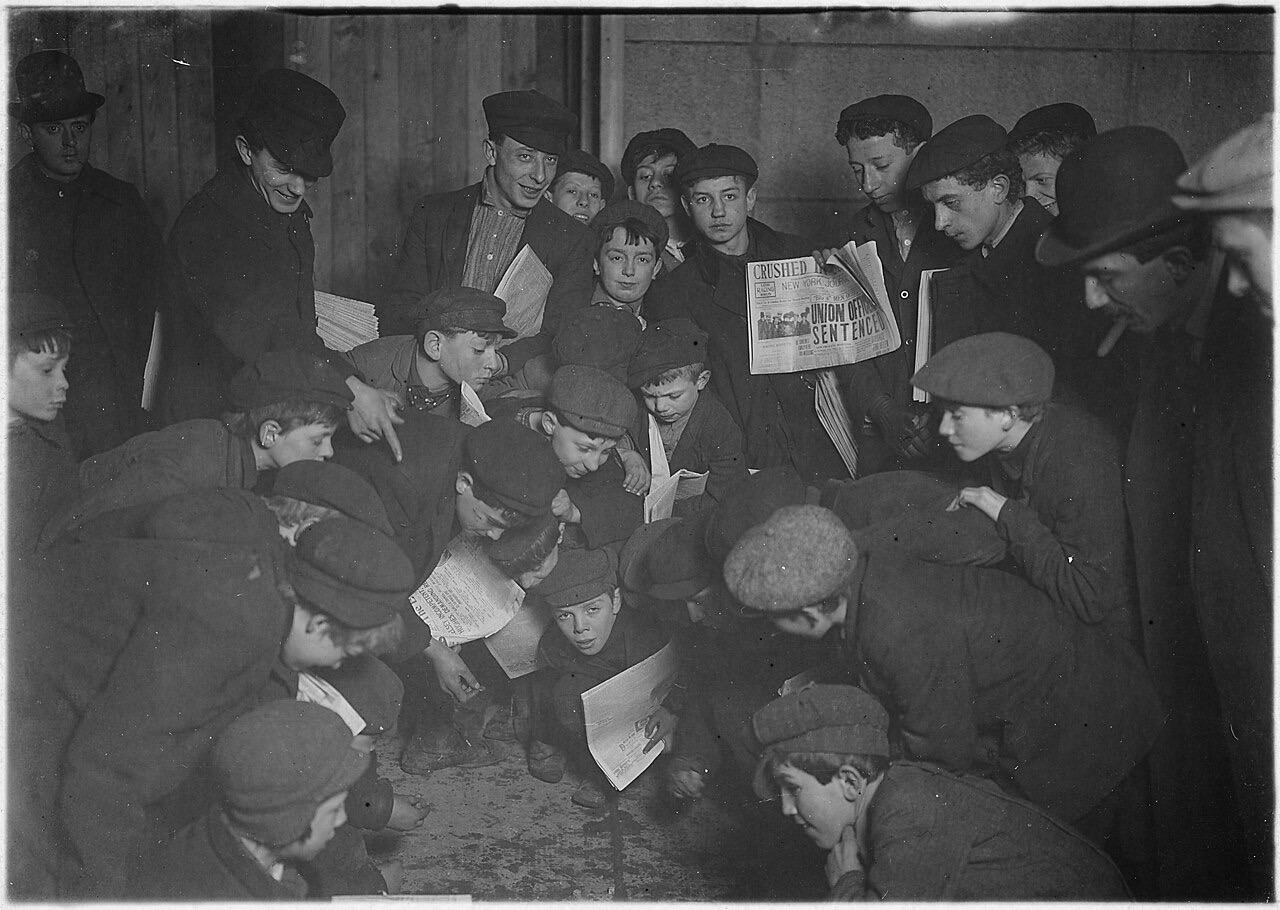
My daughter’s theater aspirations has put me on a broadway musical journey these last few weeks. Last night, we watched the filmed stage version of Newsies from 2017, not the 1992 Christian Bale version. Le sigh!
I remembered singing and dancing, but I forgot about the proletariat struggle. If you are foggy on the story like me, here’s the recap. Young boys sold newspapers on city streets to earn money for their families and survival. After the War (Spanish-American) was over, dipping sales had the papers upping their costs to the newsies in order to soften the financial impact on themselves.
Inspired by the subway workers strike, the newsies refused to deliver papers until wholesale prices were lowered. Papers retaliated by refusing to write about it, so with the help of a plucky, young journalist they made their own paper. They also widened their scope encouraging all the child workers to boycott work at the factories. They win and everyone dances off stage.
But is it true? Yes, there was a Newsboy Strike 1899 that pitted children against newspaper publishers Joseph Pulitzer (of the New York World) and William Randolph Hearst (of the New York Journal). Instead of hottie Jack Kelly played by a 27-year-old tenor, the key organizer was Louis Ballatt, known as “Kid Blink” who wore an eyepatch and gave rousing speeches. There were also a bunch of other kids with cool street names like “Racetrack” and “Hungry Joe.”
Protesting the ten-cent price hike, 60 cents instead of 50 per hundred papers which were sold for a penny a piece, the youth of Long Island marched across the Brooklyn Bridge and fought scabs, causing newspaper sales to drop by half. Other parts of the city joined. The newspapers tried to hire men to replace them, but they didn’t show up for work, and advertisers pulled their funding.
And the plucky reporter? Yes, there was Annie Kelly, a woman writing for the Sun who supported the boys and even gave a short speech at one of their rallies. No, they didn’t produce their own paper, but they made news. After two weeks the publishers came to a compromise by promising to buying back any unsold papers.
What about the other child laborers? Unfortunately that wasn’t legally controlled in the United States until 1938. Children often worked in textiles, slaughter houses and industry. According to the census of 1900, eighteen percent of ten to fifteen-year-old children worked. Tim has a great, great grandfather whose were torn off his body in a horrific factory accident at age sixteen. He survived and raised a family.
Farm work is the major modern day exception to child labor laws, with children as young as twelve still being employed during school hours. I taught a college student who had previously dropped out of school at thirteen, eighth grade, to help her migrant-worker parents. She didn’t make it back to the classroom until her late twenties. Worldwide 138 million children still work with 54 million working in hazardous conditions. Seize the day!
